Notes, summaries, assignments, exams, and problems for Chemistry

Sort by
Subject
Level

Chemical Bonding and Solution Chemistry Concepts

Classified in Chemistry

Written on in English with a size of 3.59 KB

Intermolecular Forces (IMFs)

IMFs include: Covalent, Hydrogen, Metallic, Dipole, London, and Ion interactions.

Solution Chemistry Formulas

  • pH (Acidic Solutions): $\text{pH} = -\log[\text{H}^+] = -\log N = \text{p}H_A = \sqrt{K_a M}$ (where $K_a = x^2/M$ and $-\log x = \text{p}OH$ is incorrect in this context, use $\text{pH} = 14 - \text{pOH}$)
  • pOH (Basic Solutions): $\text{pOH} = -\log[\text{OH}^-] = -\log N$. For weak bases (WB): $K_b = x^2/M$ and $-\log x = \text{pOH}$, leading to $\text{pH} = 14 - \text{pOH}$.

Strong Acids

Common strong acids include: $\text{HNO}_3$, $\text{H}_2\text{SO}_4$, $\text{HBr}$, $\text{HI}$, $\text{HClO}_4$, and $\text{HClO}_3$.

Lewis Acid

A compound or ionic species that can accept an electron pair from a donor compound.... Continue reading "Chemical Bonding and Solution Chemistry Concepts" »

Law 19983 on

Classified in Chemistry

Written on in English with a size of 2.18 KB

1.Who propossed the theory of One-dimensional consolidation? Karl Terzaghi

2.What types of permeameters exist in Lab tests? Constant head permeameter and Failing head permeameter

3.What is the name of the equation that Governs the 2D underground flow? Laplace’s Equation.

4.Name of the method of draw flow nets That uses iterative calculations. Finite Differences

5.What are the units of the compression Index Cc? Adimensional, NOT UNITS

6.Describe boiling in soils. Boiling of soils occurs when there is an Upward flow and the seepage force is greater that the submerged weight of the Soil.

7.What are the assumptions in laplace’s Equation. Darcy’s law applies, Water and Solids are uncompressible

8.When in it better to use failing head permeameter?

... Continue reading "Law 19983 on" »

Water Treatment and Quality Principles: Key Concepts

Classified in Chemistry

Written on in English with a size of 3.95 KB

Water Quality and Treatment Fundamentals

1. Eutrophication

What does the term eutrophication refer to?
An excess of algae growth due to inorganic nutrients.

2. Turbidity and Solubility

What type of particles are responsible for turbidity?
Particulate non-settleable compounds.

If the partial pressure of a gas increases, the solubility in water of the gas:
Increases.

3. Environmental Impacts

Which of the following is an effect of eutrophication?

  • Increase of pH in water where there is eutrophication.
  • Bacteria consume the oxygen in water by degrading dead plants.
  • Plants do not grow due to a lack of sunlight.

Which of the following is an effect of thermal pollution?
Lack of O2 due to lower solubility of gases at high temperatures.

4. Water Chemistry and Directives

What

... Continue reading "Water Treatment and Quality Principles: Key Concepts" »

Determining the Order of Reaction: Methods and Examples

Classified in Chemistry

Written on in English with a size of 1.58 KB


Q#9.1: How order of reaction is experimentally determined.

Ans. Order of reaction is determined by the following two methods.

  1. From Rate Law.

    In this method, the rate of reaction is measured using chemical and physical methods (volumetric, gravimetric, spectrophotometer, pH-meter, conductometric methods). The dependence of the rate of reaction on the concentration of reactants tells us about the order of reaction. For example, a reaction in which the rate of reaction doubles when the concentration of reactants is doubled will be of first order. If the rate increases four times by doubling the concentration, the reaction will be of second order.

  2. Ostwald’s Isolation Or Large Excess Method.

    This method is used to determine the order of complicated

... Continue reading "Determining the Order of Reaction: Methods and Examples" »

Organic Compounds, Aldehydes, Ketones, Moles of Atoms, Chemical Equations

Classified in Chemistry

Written on in English with a size of 1.98 KB


Give the general formula and class of organic compounds for each of the following;

a) CH3-OH  methanol

b) CH3-O- CH3  either


How are aldehydes and ketones alike? How are they different?

Aldehydes and ketones are much alike in many of their reactions, owing to the presence of the carbonyl functional group in both


How many moles of atoms are there in each of the following?

a. 40.1 g Ca  1.00 mol Ca

b. 11.5 g Na  0.500 mol Na

c. 5.87 g Ni  0.100 mol Ni

d. 150 g S  4.68 mol S

e. 2.65 g Fe  0.0475 mol Fe

f. 0.007 50 g Ag  6.5 x 10^-5 mol Ag


1. What is the mass in grams of 2.25 mol of the element iron, Fe?

2.25 mol Fe x (55.9g Fe/ 1 mol Fe)= 126g Fe


2. What is the mass in grams of 0.375 mol of the element potassium, K?

0.375 mol K x (39.1g K/ 1

... Continue reading "Organic Compounds, Aldehydes, Ketones, Moles of Atoms, Chemical Equations" »

Coh3 chemical name

Classified in Chemistry

Written on in English with a size of 14.4 KB

Limiting Reagents

Sometimes when reactions occur between two or more substances, one reactant runs out before the other. That is called the "limiting reagent". Often, it is necessary to identify the limiting reagent in a problem. 
Example: A chemist only has 6.0 grams of C2H2 and an unlimited supply of oxygen and he desires to produce as much CO2 as possible. If she uses the equation below, how much oxygen should she add to the reaction?

2C2H2(g) + 5O2(g) ---> 4CO2(g) + 2 H2O(l)

To solve this problem, it is necessary to determine how much oxygen should be added if all of the reactants were used up (this is the way to produce the maximum amount of CO2). 
First, we calculate the number of moles of C2H2 in 6.0 g of C2H2. To be able to calculate

... Continue reading "Coh3 chemical name" »

Fundamental Physics: Sound, Radioactivity, Planets & Gravity

Classified in Chemistry

Written on in English with a size of 2.82 KB

Sound Questions from Exam #2

How does the density of the medium affect the speed of sound? The density of a medium is the second factor that affects the speed of sound; the greater the density, the faster the sound.

  • b) Which is the softest sound a human can hear? 20 Hz… 0 dB
  • c) What is an example of a sound which will cause immediate hearing loss? Jet engine. dB range for this sound: 120 dB
  • d) Two sounds are emitted at the same time: Sound A: 10 meters through air, Sound B: 10 meters through water: which travels faster? Sound B
  • e) In the dB or decibel scale, sound pressure is compared to: The softest a human can hear.

Solar System Planet Order

Solar system in order distance of planets from the Sun: Mercury, Venus, Earth, Mars, Jupiter, Saturn, Uranus,

... Continue reading "Fundamental Physics: Sound, Radioactivity, Planets & Gravity" »

Essential Physics & Chemistry Concepts

Classified in Chemistry

Written on in English with a size of 3.1 KB

Photoelectric Effect Explained

The photoelectric effect is the emission of electrons or other free carriers when light shines on a material. Electrons emitted in this manner are called photoelectrons.

Specifically, when light shines on a metal, electrons can be ejected from its surface. This phenomenon, where light waves hitting a metal surface cause electrons to be ejected, is a fundamental aspect of the photoelectric effect.

Chemical Bonds: Types and Strengths

Understanding Chemical Bonds: Strongest to Weakest

Chemical bonds are the forces that hold atoms together to form molecules. Here are three types, generally ordered from strongest to weakest:

  1. Ionic Bonding

    Ionic bonding involves a transfer of an electron, where one atom gains an electron while

... Continue reading "Essential Physics & Chemistry Concepts" »

Chemistry Lab Questions and Answers

Classified in Chemistry

Written on in English with a size of 7 KB

Questions

Answers

Why do you use distilled water in your experiments?

Because distilled water has all its impurities removed through distillation.

What is the formula for converting oC to Fahrenheit( F)?

(oC x 1.8) + 32

Formula for converting oF into Celsius

 (oF - 32) 7TVxAAAAGUlEQVQYV2NgwAZYFaCiyYKCIlAmXAxV  1.8

Formula for converting oC to Kelvin(K)

K = oC + 273.15

Name all the volumetric apparatus used in the lab

Beaker, measuring cylinder, Burette, Pipet, and volumetric flask. (See the attachment)

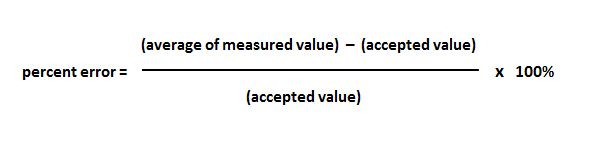
A student got the following results in his experiment: 14.9g, 14.19g, 14.88g, 14.92g, but the actual weight is 20.90g. How accurate are the student results. And how precise are the results.

The student results are not accurate but precise. Has the precision of 7TVxAAAAH0lEQVQYV2NgQAOsBkABOJEkKCiCxIVI  0.05g

Sketch 2 pieces of glassware:

... Continue reading "Chemistry Lab Questions and Answers" »

Key Concepts in Thermodynamics and States of Matter

Classified in Chemistry

Written on in English with a size of 2.75 KB

Kinetic Energy and the Nature of Matter

  • Kinetic Energy: The energy an object possesses due to its motion.
  • Kinetic Theory: States that all matter is composed of tiny particles in constant motion.

Pressure and Its Measurement

  • Gas Pressure: Results from the force exerted by a gas per unit surface area of an object.
  • Vacuum: An empty space devoid of particles and pressure.
  • Atmospheric Pressure: Arises from the collisions of atoms and molecules in the air with objects.
  • Barometer: A device used to measure atmospheric pressure.
  • Pascal (Pa): The SI unit of pressure.
  • Standard Atmosphere (atm): The pressure required to support 760 mm of mercury in a mercury barometer at 25ºC.

Phase Transitions and States of Matter

  • Vaporization: The conversion of a liquid to a gas
... Continue reading "Key Concepts in Thermodynamics and States of Matter" »