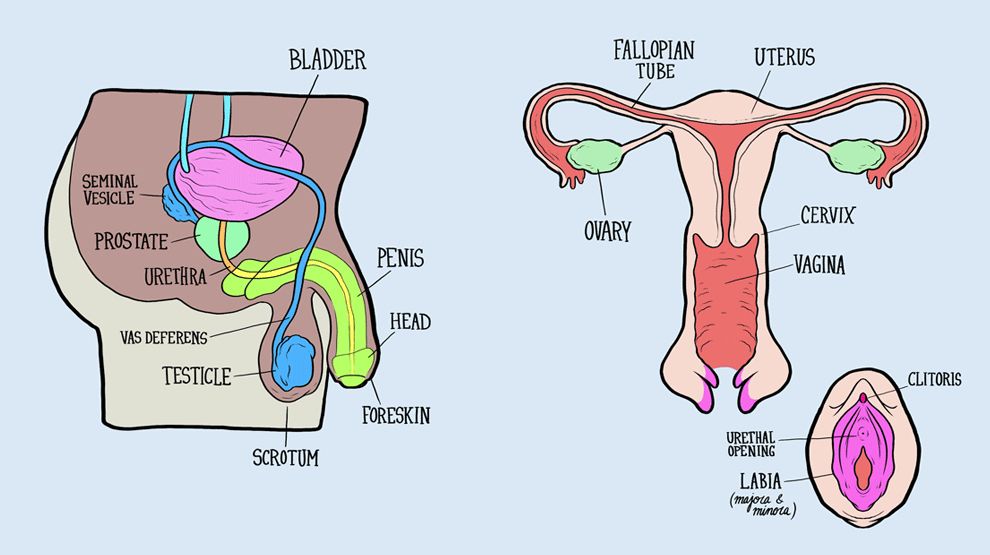
Male and Female Reproductive Organs and Functions
 English with a size of 4.18 KB
Human Reproductive System Anatomy
Male Reproductive System Components
- Testes: Produce sperm and testosterone.
- Epididymis: Sperm mature and are stored here.
- Ductus (vas) deferens: Carries sperm from the epididymis toward the urethra.
- Urethra: A tube that carries semen out of the body.
- Penis: Deposits semen and also allows urine to leave the body.
- Accessory glands:
- Seminal vesicles: Add fructose-rich fluid for energy.
- Prostate gland: Adds alkaline fluid to help protect sperm.
- Bulbourethral glands: Add lubricating mucus and help neutralize the urethra.
The Pathway of Sperm
Testes → epididymis → vas deferens → ejaculatory duct → urethra → penis → out of body.
Sperm Structure and Fertilization Role
- Head: Contains the nucleus and acrosome.
- Acrosome: Contains enzymes that help sperm enter the egg.
- Midpiece: Packed with mitochondria for energy.
- Tail (flagellum): Responsible for movement.
Sperm are specialized for travel, energy, and penetrating the oocyte during fertilization.
Physiology of Erection
An erection occurs when erectile tissue fills with blood, causing the penis to become firm. This process is controlled by nervous system and blood vessel changes, rather than sperm production itself.
Female Reproductive System Components
- Ovaries: Produce oocytes and hormones like estrogen and progesterone.
- Uterine (fallopian) tubes: Carry the oocyte; this is the usual site of fertilization.
- Fimbriae: Finger-like ends that help sweep the oocyte into the tube.
- Uterus: A muscular organ where implantation and development occur.
- Endometrium: The inner uterine lining; it thickens and sheds during menstruation.
- Cervix: The lower opening of the uterus into the vagina.
- Vagina: Receives sperm, serves as the birth canal, and acts as a passage for menstrual flow.
External Female Genitalia
- Labia majora: Outer folds that protect the external genitalia.
- Labia minora: Inner folds that also protect openings.
- Clitoris: Erectile tissue involved in sexual arousal.
- Vestibule: The area containing the vaginal and urethral openings.
- Mons pubis: A fatty pad over the pubic bone that cushions and protects.
Gamete Production and Fertilization Process
- Spermatogenesis occurs in the seminiferous tubules of the testes.
- Oogenesis occurs in the ovaries.
- A secondary oocyte is the cell released at ovulation; it is not yet a fully completed egg.
- Ovulation is the release of the secondary oocyte from the ovary.
- Fertilization usually occurs in the uterine tube, not in the uterus.
- Before fertilization, the oocyte is swept into the tube by fimbriae and cilia.
- After fertilization, the zygote begins dividing as it moves toward the uterus.
Key Reproductive Physiology Facts
- Accessory gland secretions nourish sperm, protect them, and facilitate movement.
- Cilia and fimbriae are essential for moving the oocyte through the uterine tube.
- Damage to uterine tubes can block the passage of oocytes and sperm, preventing fertilization or increasing ectopic pregnancy risk.