
The Rise of Humanism: Impact on Individual Independence
Classified in Philosophy and ethics
Written on in  English with a size of 3.82 KB
Humanism is the belief that humanity possesses inherent beauty, worth, and dignity. Therefore, life here on Earth should be cherished rather than simply endured.
Why Humanism Developed
 |
Before we delve into humanism and the effect it had on the individual, we must first discuss the reasons behind its development. During the Middle Ages (approximately the 3rd through 13th centuries), life and culture were primarily focused on the Church and religion. However, toward the beginning of the 14th century, the power of the Church began to greatly decline. This decline is the main reason for the development of humanism, as people became less interested in thinking about God, the afterlife, and the saints, and more interested in thinking about themselves, their natural world, and the here and now.
Key Causes of the Church's Decline
Many historians believe there were two main causes of this decline:
The Bubonic Plague
The plague ravaged Europe, killing over half of many countries' populations. As the plague devastated and destroyed communities, the Church was helpless to stop it. People prayed, and people filled cathedrals, yet loved ones continued to die. This led many to disenchantment, causing them to seek out other explanations beyond the spiritual for human suffering and loss.
The Rise of the Market Economy
As money began to be amassed through trade, the power of the Church declined even more. From this rise came city-states and monarchies governed more by economy than religious restriction. All in all, the Church became too stuffy, too impractical, and too rigid; thus, it was replaced with the secular human capacity to learn, create, and especially, enjoy! In short, it was replaced with the idea of humanism, where the study of human progress and human nature is at the center of all things.
Now that we've covered the reasons for the development of humanism, we can dive into what this actually meant for the individual in the areas of independence and interests.
Humanism and Individual Independence
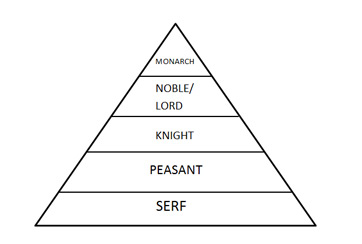 |
First, humanism radically changed the idea of individual independence. Prior to the 14th century, much of Europe, and especially Northern Europe, practiced the feudal system in which wealth was based on land ownership. Generally speaking, under this system, people were seen as part of a collective whole designed to keep feudal society and the manor system intact. Serfs, or the poor workers, were tools used by the wealthy to work their land holdings and maintain their wealth.
Adding to this imprisonment of sorts, the Church believed that to be concerned with yourself and your rights was nothing more than arrogance, rebellion, and sin! One should only be concerned with obeying the rules and following them without question.