
Notes, summaries, assignments, exams, and exercises for English for Primary education

Alienation and Displacement in The Thing Around Your Neck

English3.52 KB

In Chimamanda Ngozi Adichie's short story "The Thing Around Your Neck," the themes of alienation and displacement are examined through the eyes of Akunna, a young Nigerian woman who wins the American Visa Lottery.

1. Physical and Cultural Displacement

  • The Illusion of the American Dream: Back home, America is romanticized through Hollywood as a paradise where everyone owns a car and a big house. Upon arrival, Akunna is physically displaced to a small town in Connecticut, working long hours as a waitress for meager pay.
  • In-Between Worlds: She is uprooted from her support system but cannot go back because her family relies on the money she sends home. She is physically in America but emotionally anchored to Nigeria, occupying a displaced, liminal
...
Continue reading "Alienation and Displacement in The Thing Around Your Neck" »

Advanced English Language Practice Test: Grammar and Vocabulary Review

English4.38 KB

This mock examination covers key areas of English language proficiency, including verb forms, vocabulary definitions, translation skills, and advanced sentence structure correction.

1. Verb Forms: Write the Past Participle

Provide the Past Participle form for each irregular verb listed below:

  • Bring: brought
  • Wear: worn (Original input was 'wore', which is Past Simple)
  • Go: gone
  • Send: sent
  • Buy: bought
  • Freeze: frozen
  • Know: known
  • Sit: sat
  • Meet: met
  • Fall: fallen
  • Win: won
  • Fight: fought
  • Steal: stolen
  • Get: got / gotten

2. Vocabulary Matching: Terms and Definitions

Match the term (A-J) with its correct definition:

  1. PROFITABLE (Rentable): Beneficial or useful.
  2. SLIPPER: Comfortable shoes to wear in the house.
  3. SLOT: Place or position, as in a sequence or series.
  4. BOTH: One and
...
Continue reading "Advanced English Language Practice Test: Grammar and Vocabulary Review" »

Common Irregular Verbs in English and Spanish

English3.38 KB

InfinitivePast SimplePast ParticipleSpanish Translation
bewas, werebeenser
bearborebornesoportar
beatbeatbeatengolpear
becomebecamebecome(para describir cambios)
beginbeganbeguncomenzar
bendbentbenttorcer
betbetbetapostar
bidbidbidofrecer
bindboundboundamarrar
bitebitbittenmorder
blowblewblownsoplar
breakbrokebrokenquebrar
bringbroughtbroughttraer
buildbuiltbuiltconstruir
burnburned, burntburned, burntarder
buyboughtboughtcomprar
catchcaughtcaughtatrapar
choosechosechosenelegir
comecamecomevenir
costcostcostcostar
creepcreptcreptarrastrar
cutcutcutcortar
dealdealtdealtactuar
digdugdugcavar
dodiddonehacer
drawdrewdrawntirar
dreamdreamed, dreamtdreamed, dreamtsoñar
drivedrovedrivenconducir
drinkdrankdrunkbeber
eatateeatencomer
fallfellfallencaer
feedfedfeddar de comer
feelfeltfeltsentirse
fightfoughtfoughtluchar
findfoundfoundencontrar
flyflewflownvolar
forgetforgotforgottenolvidar
forgiveforgaveforgivenperdonar
freezefrozefrozentener
...
Continue reading "Common Irregular Verbs in English and Spanish" »

Film Preferences, Travel, and Pronunciation Insights

English3.52 KB

Diverse Interests: Films, Adventures, and Language

Film Preferences and Viewer Opinions

Film Genres and Types

  • A romance
  • An action film
  • A romance based on a book
  • A science fiction film
  • A modern vampire film

Viewer Opinions and Preferences

  • C: Thinks the film shows you not to judge people too quickly.
  • C: Says the film is not too sentimental, thanks to the actor.
  • A: Likes a film in which everything we think is real.
  • D: Has seen their favorite film more than once.
  • E: Prefers the first version of the film.
  • E: Likes a film with murder, violence, and blood.

Activities and Travel Destinations

Outdoor Activities

  • A dirtboard is a board with wheels that you stand on.
  • To go canyoning, you need ropes and special equipment.
  • Zip-lining is easy and exciting.

A Trip to Paris

  • Paris
...
Continue reading "Film Preferences, Travel, and Pronunciation Insights" »

Modal Verbs and Their Usage in English Grammar

English3.88 KB

Could: she could have missed the bus - possibility - Yes or no

May - Might: she may have missed the bus/ she might be upset - probability
I could ride a bike when I was 5: general situation
I was able to ride a bike that stormy night: specific situation
In the negative couldn't is the same as wasn't able to
Could + have + past participle: Past ability that wasn't used, you had the opportunity but I didn't take it. You could have told me - (criticism)
May and might cannot be used in wh-questions
Obligation: from the speaker's point of view: Must - I must study for the exam (internal obligation, imposing myself) Have to- I have to study modals (I have to is external, somebody is obligating me to do that)
You mustn't use the dictionary - internal prohibition
Don'
...
Continue reading "Modal Verbs and Their Usage in English Grammar" »

Mastering English Grammar: Key Concepts & Practice

English2.66 KB

1. Defining Relative Clauses

  • Are those the children that you looked after some years ago?
  • Mayka is a Spanish woman whose husband is Egyptian.
  • She hasn't given me back the book which she borrowed from me last week.
  • We didn't know the doctor who came by.
  • I have found the comic which you were looking for.
  • We went to the party which wasn't very enjoyable.

2. Non-Defining Relative Clauses

  • Sheila, who has never visited England, speaks good English.
  • A friend of mine, whose father is the manager of the company, helped me to get a job.
  • The population of London, which was once the largest city in the world, is now falling.
  • The storm, which nobody had been expecting, caused a lot of damage.
  • This is Mr. Smith, whose son Philip plays in our team.
  • My sister, whose boyfriend
...
Continue reading "Mastering English Grammar: Key Concepts & Practice" »

Letters to the Editor: A Compilation

English2.55 KB

A Letter of Disappointment

Regarding "Young People Are Lazy and Impolite"

Dear Editor,

I was disappointed to read your article on the 9th of February, "Young People Are Lazy and Impolite". I'm tired of reading false stories that all young people are uncaring, lazy, or impolite when this is not true.

I am a person who studies and works at the same time. I also care about my family and friends. I consider myself a responsible girl. Moreover, in my free time, I like to have fun and go out with my friends.

Furthermore, all of my friends study or work, and they are concerned about their future.

In summary, not all young people are lazy and rude. What's happening is that people classify all young people without knowing them personally.

Yours faithfully,...

Continue reading "Letters to the Editor: A Compilation" »

Essential English Vocabulary and Reported Speech Rules

English5.18 KB

Essential English Vocabulary and Grammar Rules

Key Vocabulary and Spanish Translations

Below is a list of important English terms and phrases with their corresponding Spanish meanings:

  • Unable to read: No poder leer / Incapaz de leer
  • Leave permanently: Salir / Marcharse definitivamente
  • Think of: Pensar en / Considerar
  • Defend: Defender
  • Obligatory: Obligatorio / Obligatoria
  • No fear: Sin miedo (Literal) / Ni lo pienses (Idiom: Don't even think about it)
  • Go to: Ir a
  • Review: Revisar
  • Brand-new: Sin estrenar
  • Record: Anotación
  • Pay attention: Prestar atención
  • Compulsory: Obligatorio
  • No trace of: Sin rastro de
  • Cheat: Copiarse
  • Stand up for: Salir en defensa de alguien
  • Attend: Ir a / Asistir
  • Ridiculous: Ridículo
  • Motivated: Motivado
  • Used to (Past habit): Soler
  • Courage: Valor
...
Continue reading "Essential English Vocabulary and Reported Speech Rules" »

Mastering Restaurant Complaint Conversations

English3.39 KB

StageProcedure
Lead-in

Engaging the Student

The tutor introduces the topic of eating out and initiates a conversation with the student using these questions:

  • Do you enjoy eating out? How often do you do it?
  • Do you have any favorite restaurants or cuisines? Why do you like them?
  • Have you ever encountered a problem at a restaurant? Did you complain?
Content Preparation

Activating Background Knowledge

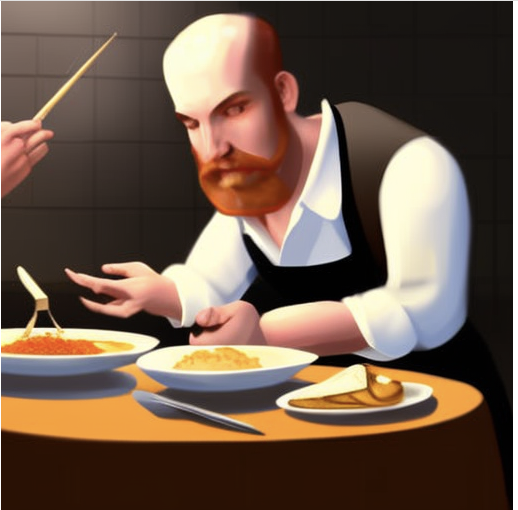
The tutor shows a picture of a man complaining in a restaurant: Screenshot_2023-01-23_at_00.00.39.png

The student discusses the following:

  • Why do you think this man is complaining?
  • What are some common reasons people complain in restaurants?
Language Preparation

Building Functional Language

The tutor and student brainstorm expressions. The tutor then provides a categorizing task: organize phrases

...

Continue reading "Mastering Restaurant Complaint Conversations" »

Vocabulary, The King's Speech, Agatha Christie, Dr. Faustus, Dorian Gray: Key Facts

English3.38 KB

Words and Their Meanings

  • Abdicate: To renounce, resign, or quit.
  • Trivial: Unimportant or small.
  • Rustic: Relating to the countryside; rural.
  • Ostentation: Flashiness, showiness, or display.
  • Impertinent: Rude or disrespectful.
  • Pernicious: Malicious or evil.
  • Chagrin: Embarrassment or humiliation.
  • Flummox: To confuse.
  • Enigma: A mystery or riddle.
  • Chronometer: A timepiece or watch.

Key Facts from *The King's Speech*

Who was King George V?

David and Albert's father, the King of England during World War I.

Countries in the British Empire

England, Scotland, Wales, Northern Ireland, India, Canada, Australia, and Hong Kong.

What is a book that holds a person's daily thoughts?

A diary.

What did doctors tell King George VI to do to relax?

They advised him to smoke.

King George

...
Continue reading "Vocabulary, The King's Speech, Agatha Christie, Dr. Faustus, Dorian Gray: Key Facts" »