Notes, summaries, assignments, exams, and exercises for Chemistry for Secondary education

Chemical Oxides: Formulas and Naming (Traditional, Systematic, Stock)

ChemistryUpdated on 3.1 KB

Understanding Chemical Oxides

Binary combinations between oxygen and all other chemical elements except the noble gases and fluorine.

Formulating Oxides

Oxides have the following general formula: X2On, where:

  • X is the symbol of the other element.
  • 2 corresponds to the valence of oxygen.
  • O is the symbol for oxygen.
  • n is the valence of the other element (metal or nonmetal).

Naming Oxides: Three Classifications

Oxides are named using three classifications: Traditional, Systematic, and Stock.

Traditional Nomenclature for Oxides

Basic Oxides: These result from the combination of oxygen and a metal.

  • If the metal has a single valence, the oxide is named "Oxide" followed by the name of the metal.

Examples:

  • CaO: Calcium Oxide
  • Na2O: Sodium Oxide
  • If the metal has two
...
Continue reading "Chemical Oxides: Formulas and Naming (Traditional, Systematic, Stock)" »

As2 covalent bond

Chemistry4.09 KB

IONIC: thet are solids at room temperatures and have medium to high meltin and boiling points. Ionic bond is strong because it is electrostatic. They are very hard. It is not eassy to scratch an ionic compound. They are fragile. Hitting them forces ions with the same signs together, and they repel and break the crystal. Most disolve well in water, water molecules may surround the ions,weakening their bonds and separating them from the crystal lattice. This is called solvation. They do not conduct electricity well in solid state but hey do in solution or liquid state. SODIUM CHLORIDE

COVALENT-NETWORKS SOLIDS: they are solids at room temperatures since they form crystal networks called lattices. They are very hard and they have very high melting
...
Continue reading "As2 covalent bond" »

Chemical Valences and Common Ion Charges

Chemistry5.75 KB

Common Valences of Chemical Elements

This section details the typical valences (or oxidation states) for various chemical elements, grouped by their respective families in the periodic table.

Alkali Metals (Group 1)

  • Li Lithium: Valence 1
  • Na Sodium: Valence 1
  • K Potassium: Valence 1
  • Rb Rubidium: Valence 1
  • Cs Cesium: Valence 1
  • Fr Francium: Valence 1

Alkaline Earth Metals (Group 2)

  • Be Beryllium: Valence 2
  • Mg Magnesium: Valence 2
  • Ca Calcium: Valence 2
  • Sr Strontium: Valence 2
  • Ba Barium: Valence 2
  • Ra Radium: Valence 2

Transition Metals & Inner Transition Metals

Transition metals often exhibit multiple valences.

  • Ti Titanium: Valences 3, 4
  • Cr Chromium: Valences 2, 3, 6
  • Mn Manganese: Valences 2, 3, 4, 6, 7
  • Fe Iron: Valences 2, 3
  • Co Cobalt: Valences 2, 3
  • Ni Nickel: Valences
...
Continue reading "Chemical Valences and Common Ion Charges" »

Coh3 chemical name

Chemistry1.75 KB


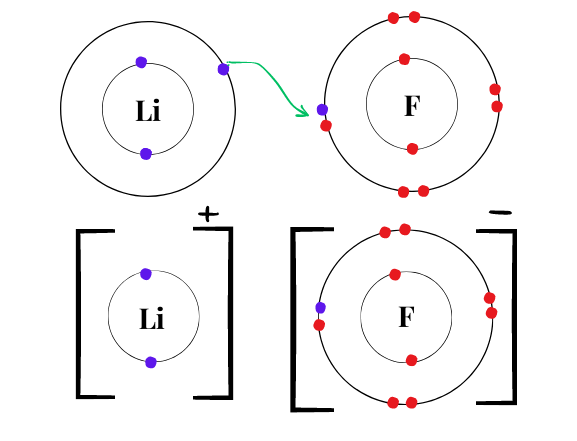
An ion is an atom which has more or less electrons than protons

All atoms want to have a full shell/empty outer shell
Noble gasses have already a full outer shell
All other elements will give or take electrons=chemical reaction

Covalent bonds are.Stronger than ionic
they make molecules and they are formed between non_metals
These bonds are between atoms fighting ever some electrons bonds where electrons are shared

Different forms of carbon: Carbon(black, it can burn)
Graphite(Grey, used as lubricant)
Diamond(Transparent, cutting hard material)

Differences between covalent and ionic compounds:
Ionic: Volatility: none
Solubility: most are very soluble
Electrical conductivity: only when dissolved in water
-liquid form

Covalent:Volatility:high
Solubility: some
...
Continue reading "Coh3 chemical name" »

Structure of the Atom, Chemical Reactions, and Acids and Bases

Chemistry6.54 KB

Structure of the Atom

Protons, Electrons, and Neutrons

Protons: Equal to the atomic number

Electrons: Equal to the atomic number

Neutrons: Equal to the atomic mass minus the atomic number

Bohr-Rutherford Diagram

Electron shells: 2, 8, 8, 18, 18, 32

Counting Atoms

Example 1: Na2CO3

  • Sodium (Na): 2
  • Carbon (C): 1
  • Oxygen (O): 3

Example 2: 4Al2(CO3)3

  • Aluminum (Al): 4 x 2 = 8
  • Carbon (C): 3 x 4 = 12
  • Oxygen (O): 9 x 4 = 36
  • Total: 56

Ions and Ionic Compounds

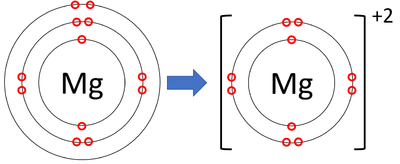
Ions are atoms that have either lost or gained electrons. While atoms are neutral, ions are charged particles.

ewfrdTqcdxAquqFBkomrXMx9bFnEuaUxChHhj7q-MJTBd5Xs--2C7wkxp6qSa6EtbS0IhSpG6LqWdrNTeiCxeYbVa-Q1VQCvGbB9f6su3HmGH-ttX74IZ1pY4XhNqS5XTpRYk5EO3cP9R4Uk4nDTj90

LQQZ-6Sp_dRlryuqGpFcY8LvG0bWbg05f1ks-w282Z3uZ1yz1zecnXF6L2XMweeDCRxiH9UVzCj1bd5Qvi0xgskH1OCOndSC8StycLi4gQQY4BLgAm4wiGxk6MQ7khX-8MllYGt5C24gWhOdzYIHj78

Ionic Compounds are a combination of a cation (positive ion) and an anion (negative ion), typically formed between a metal and a nonmetal.

Example: Calcium Chloride (CaCl2)

Calcium (Ca+2) has a charge of +2,...

Continue reading "Structure of the Atom, Chemical Reactions, and Acids and Bases" »

Coh3 chemical name

Chemistry5.92 KB

Ductility: Able to undergo change of form without breaking

·Malleability: capable of being shaped, as by Hammering or pressing:

·Density (give an Example): a measurement of how Tightly matter is crammed together. Example: Oil floats on vinegar because Its density is less.


  • Chemical properties of matter (give an Example): Are any of the properties Of matter that may only be observed and measured by performing a chemical change or chemical Reaction. Example: oxidation states

·What is a physical Change (give an example): A usually reversible change in the physical 

properties of a substance,as size or shape. Example: When melting an ice cube.

·Difference between Chemical properties and physical properties (give an example)

...
Continue reading "Coh3 chemical name" »

A Level Chemistry Notes: Enthalpy, Kinetics, and Equilibrium

Chemistry3.66 KB

Enthalpy, Rate Equations, and Halogens

Enthalpy Change of Solution

The enthalpy change that accompanies the dissolving of 1 mole of gaseous ions in H2O to form 1 mol of aqueous ions is -1008/2 = -504 kJ mol-1. F- has a more exothermic hydration enthalpy as it has a smaller ionic radius, leading to a stronger attraction to H2O molecules. The bond enthalpy for F-F is +158 kJ mol-1.

Rate Equations and Reaction Mechanisms

For the reaction: Fe3+ + 2I- --> FeI2+, the rate equation is: rate = k[Fe3+][I-]2, where k = 22.5 dm6mol-2s-1. The mechanism for this reaction is a two-step process:

  1. Fe3+ + 2I- --> FeI2+
  2. Fe3+ + FeI2+ --> 2Fe2+ + I2

Halogens

Halogens have more electrons, leading to stronger London forces between molecules. This means more heat...

Continue reading "A Level Chemistry Notes: Enthalpy, Kinetics, and Equilibrium" »

Acids, Bases, and Redox Reactions: Exploring Chemical Reactions and Processes

Chemistry1.11 KB

ACID OR BASES: Substances that react with each other according to the following reaction

Acids are substances that have a sour taste and react with limestones such as marble, vinegar, coffee, and tomato...

Bases are substances that have a bitter taste and soapy feel and do not usually attack metals, such as eggs, sodium, and toothpaste...

Redox reactions are those reactions which involve an exchange of electrons between elements. Examples include combustion (one substance oxidizes with the oxygen in the air), METAL CORROSION (iron oxidation, silver tarnishing, and aluminum losing its shine), BATTERIES (obtaining electricity from a reaction), PRECIPITATION (a reaction that produces an insoluble product, like stones in kidneys), FERMENTATION AND

...

Continue reading "Acids, Bases, and Redox Reactions: Exploring Chemical Reactions and Processes" »

Atomic Structure and Chemical Reactions: A Comprehensive Overview

Chemistry3.2 KB

Nucleus: The Center of an Atom

The nucleus is located at the center of an atom. It is very small and has a positive electrical charge due to the protons. The nucleus contains particles called protons and neutrons, which make up nearly all of the atom's mass.

Electron Cloud: The External Area of an Atom

The electron cloud surrounds the nucleus and is longer than the nucleus. It has an equal but negative electrical charge compared to the protons. The electron cloud contains particles called electrons, and their mass is negligible compared to the protons and neutrons.

Historical Development of Atomic Structure

In the 5th century, ancient Greeks proposed the concept of the atom. In 1808, Dalton discovered the existence of protons and electrons. In 1904,...

Continue reading "Atomic Structure and Chemical Reactions: A Comprehensive Overview" »

Coh3 structure

Chemistry2.64 KB

- Without H20 being polar, there would be no life on Earth, and Earth will be very dry. Humans and living organisims depend on H20 and it's polarity to sustain life on Earth because h20 wouldnt be able to form hydrogen bonds because it isnt polar. Animals who depend on ice such as polar bears and seals wold not be able to live due to ice not floating on the surface of water. When ice lacks crystal lattice structure, it starts to drown, and this happens due to the lack of hydrogen bonding. Therefore, h20 is very important for life to exist on earth.

- h-h: nonpolar covalent bond

- p-cl: covalent

- na-br: ionic

Electronegativity: 0->0.4 = covalent, 0.5->1.7=polar covalent, more than 1.7= ionic bonds, minus the EN

- Ion-induced dipole force:

...
Continue reading "Coh3 structure" »