
Notes, summaries, assignments, exams, and exercises for Mathematics for Secondary education

Essential Algebra and Calculus Formulas and Concepts

Mathematics3.96 KB

Coordinate Geometry Formulas

For points A(x1, y1) and B(x2, y2), the distance formula is:

d = √[(x2 - x1)2 + (y2 - y1)2]

Midpoint formula: ((x1 + x2)/2, (y1 + y2)/2)

Functions and Calculus Basics

  • Difference quotient: f(x+h) - f(x) / h
  • X-intercepts: Not imaginary, written as (x, y).
  • Solutions/Roots/Zeros: Can be imaginary, written as x = ___.

Financial and Parent Functions

  • Compound interest: A = P(1 + r/n)nt (r must be a decimal).
  • Continuous compound interest: A = Pert
  • Parent function y = x2: Domain: all real numbers, Range: y ≥ 0.
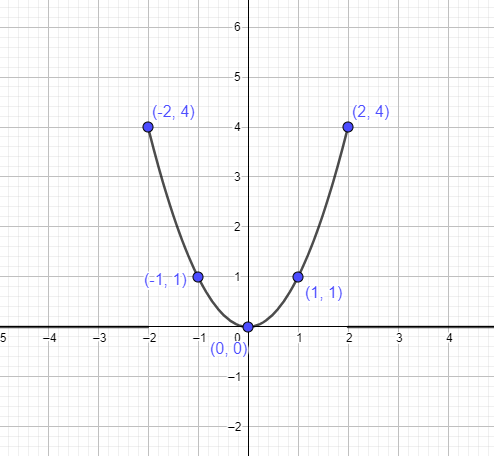
y = x^2: A Detailed Explanation Plus Examples - The Story of Mathematics -  A History of Mathematical Thought from Ancient Times to the Modern Day

  • Parent function y = √x: Domain: inside ≥ 0, Range: y ≥ 0.
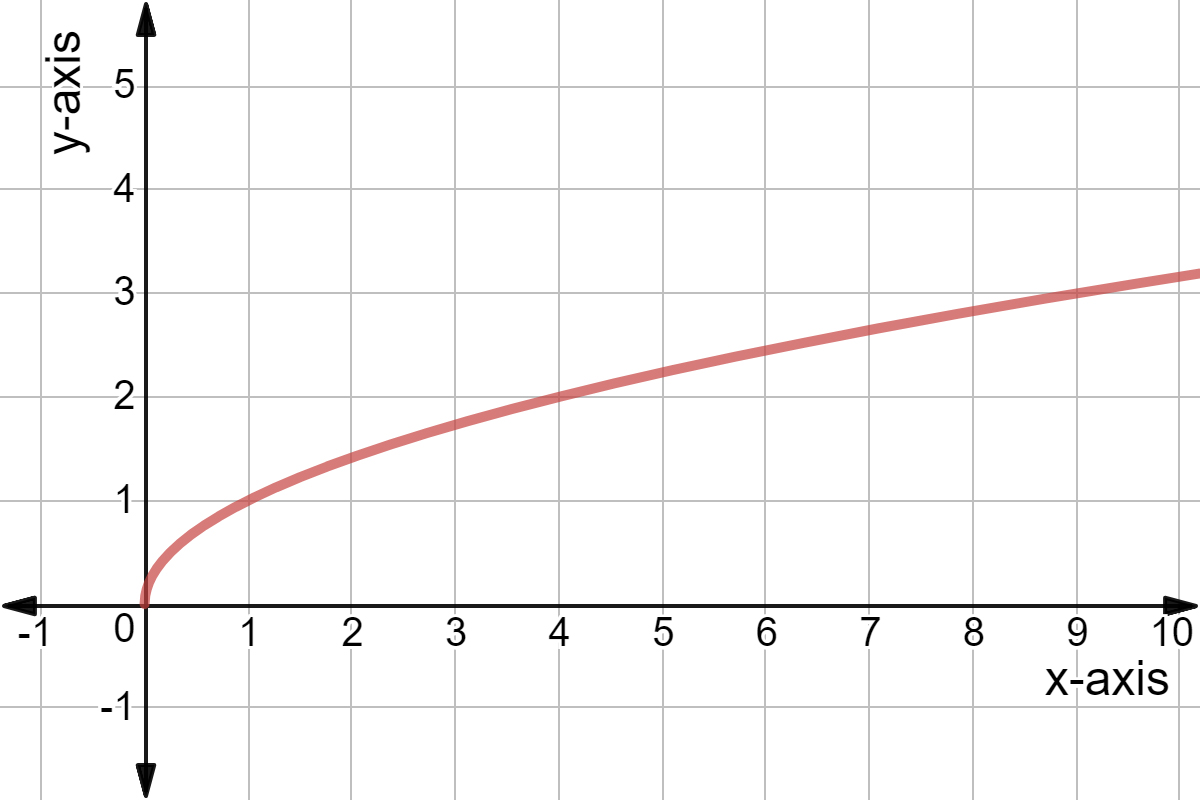
Vertical Translation of Square Root Graphs - Definition - Expii

Transformations and Analysis

Key: For transformations, ensure x inside parentheses is always positive; factor negatives out front.

  • h(x) = -32(x+4): Left 4, flip
...
Continue reading "Essential Algebra and Calculus Formulas and Concepts" »

Essential Financial Formulas for Business Analysis

Mathematics2.33 KB

Financial Balance Sheet Formulas

  • Working Capital (WC) = Accounts Receivable + Stock - Accounts Payable
  • Net Short-Term Debt = Banking ST Debt - Cash
  • Net Assets = WC + Net Fixed Assets
  • Net Liabilities = Net ST Debt + Long-Term Debt + Equity
  • Financial Margin (%) = Equity + Long-Term Debt - Net Fixed Assets

Working Capital (WC) Metrics

  • AMP Collecting = (Average Receivables / Revenue) × 365
  • 1 Day Revenue = Revenue / 365
  • Purchases = Stock1 - Stock0 + Cost of Sales (COS)
  • AMP Payment = (Average Payables / Purchases) × 365
  • 1 Day Purchases = Purchases / 365
  • AMP Stock = (Average Stock / COS) × 365
  • 1 Day COS = COS / 365
  • PMMF = AMP Collecting + AMP Stock - AMP Payment

Cash Flow Analysis

  • CFO (Cash Flow from Operations) = Net Profit + Amortization - Increase in WC (WC1
...
Continue reading "Essential Financial Formulas for Business Analysis" »

Advanced English Exam Preparation: Grammar and Vocabulary

Mathematics3.48 KB

Get Ready for Your Exam

Use of English

Vocabulary Check: Correct Spelling

  • 1. Inclusion
  • 2. Impressive
  • 3. Unprofessional
  • 4. Glamorous
  • 5. Repeatedly
  • 6. Unintentionally

Unreal Past and Had Better Structures

Incomplete Sentences/Corrections:
  • 1. I'd sooner we travel by boat.
  • 2. You'd better say sorry for...
  • 3. He acts as though he owns...
  • 4. I'd rather you came... (Correction: 'to come' changed to 'came' for correct structure)
  • 5. It's time to buy a new car....
  • 6. The party's over, so we might as well stay home. (Correction: 'staying' changed to 'stay')

Language Review

Grammar Practice: Conditionals and Wishes

Conditional Sentences (Corrections Needed)

  1. We wouldn't have been lost if you had remembered to bring the map. (Corrections: 'been' to 'have been', 'remember' to
...
Continue reading "Advanced English Exam Preparation: Grammar and Vocabulary" »

Essential Sales Closing Techniques and Post-Sale Strategies

Mathematics2.73 KB

Effective Sales Closing Techniques

  • Which Close: Encourages a customer to make a decision between two specific items.
  • Standing Room Only Close: Used when a product is in short supply or when the price is expected to increase soon.
  • Direct Close: A technique where you explicitly ask for the sale.
  • Service Close: Explaining the services available to overcome potential obstacles.

Mastering Suggestion Selling

Suggestion selling involves offering additional goods or services to the customer. Methods include:

  • Offering related merchandise.
  • Recommending larger quantities.
  • Calling attention to special sales opportunities.

Upselling and Cross-Selling

  • Upselling: Suggesting larger quantities to make a customer eligible for special discounts.
  • Cross-Selling: Suggesting
...
Continue reading "Essential Sales Closing Techniques and Post-Sale Strategies" »

Microsoft Excel Fundamentals: Spreadsheet Basics

Mathematics2.3 KB

Microsoft Excel Spreadsheet Fundamentals

Microsoft Excel is an electronic spreadsheet that serves as a tool for performing various operations and mathematical calculations. A spreadsheet is an application or program that allows for data entry and processing. These sheets are also referred to as worksheets.

Core Components

  • Rows: Horizontal lines identified by numbers ranging from 1 to 65,536.
  • Columns: Vertical lines identified by letters running from A through IV (totaling 256 columns).
  • Cells: The intersection of a row and a column, identified by the column letter and row number (e.g., A1, AB256, B25).
  • Range: A group of cells extending along one or more rows or columns.
  • Active Cell: The cell where the cursor is currently located, identified by dark
...
Continue reading "Microsoft Excel Fundamentals: Spreadsheet Basics" »

Core Concepts of Fractions, Decimals, and Exponent Rules

Mathematics4.22 KB

Fundamental Number Concepts

Fraction Definition

A fraction is an expression a / b, where a (the numerator) and b (the denominator) are integers, and b must not be zero.

Equivalent Fractions

Two fractions, a / b and c / d, are considered equivalent, written as a / b = c / d, if the cross-product holds true: a · d = b · c.

Understanding Decimal Numbers

Decimal numbers express quantities that include incomplete units. A decimal number has two parts separated by a comma (or decimal point): the integer part (located to the left) and the fractional part (located to the right).

Types of Decimal Numbers

  • Terminating Decimal: A decimal number is terminating (or accurate) when it has a finite number of decimal places.
  • Periodic Decimal (Repeating): A decimal
...
Continue reading "Core Concepts of Fractions, Decimals, and Exponent Rules" »

Essential Academic Writing and Grammar Principles

Mathematics2.75 KB

Academic Text Development

Textbooks and academic texts are often designed to support high school students.

Key Textual Operations

  • The Summary: Creating a new text based on the original by eliminating unimportant information, selecting relevant content, and generalizing common elements.
  • The Scheme: A visual representation of a text's main ideas and secondary points, illustrating their logical relationships.
  • Lecture Notes: Records in which students summarize faculty presentations.
  • The Written Statement: A didactic, desktop information brief where the author presents clear, orderly, and accurate knowledge on a topic.
  • Tests: Assessments where students demonstrate their knowledge and skills.

Linguistic Rules

Accentuating Triphthongs

A triphthong is a set...

Continue reading "Essential Academic Writing and Grammar Principles" »

Solving Linear Systems and Mathematical Progressions

Mathematics3.82 KB

Number of Solutions in Linear Systems

  • a) Intersecting Lines (X): Consistent Independent System (Unique solution).
  • b) Coincident Lines (/): Consistent Dependent System (Infinite solutions).
  • c) Parallel Lines (//): Inconsistent System (No solutions).

Methods for Solving Systems

Substitution Method

  1. Isolate one of the unknowns in the equations: From x - y = 3 to x = 3 + y.
  2. Substitute the expression into the other equation: Given 2x - 3y = 4, substitute x: 2(3 + y) - 3y = 4.
  3. Solve the equation for the remaining unknown: 6 + 2y - 3y = 4 → -y = 4 - 6 → -y = -2 → y = 2.
  4. Calculate the value of the second unknown: Substitute y = 2 into x = 3 + y → x = 3 + 2 → x = 5.
  5. Verify the solution: Ensure the resulting values satisfy the system.

Equalization Method

  1. Isolate
...
Continue reading "Solving Linear Systems and Mathematical Progressions" »

Grade 9 Math Final Exam Review: Rational Numbers and Exponents

Mathematics1.99 KB

Grade 9 Math Final Review

Rational Numbers

A rational number is any positive or negative number that can be written as a fraction. Terminating and repeating decimals are always rational because they can be expressed as fractions.

  • Adding and Subtracting: Find a common denominator. (e.g., 2/4 + 3/8 = 4/8 + 3/8 = 7/8)
  • Multiplying: Reduce before multiplying if possible. (e.g., 11/8 * 6/22 = 1/4 * 3/2 = 3/8)
  • Dividing: Use the Keep, Change, Flip method. Keep the first fraction, change division to multiplication, and flip the second fraction.

Converting Between Forms

  • Decimal to Fraction: Write the decimal over 1. Count the digits after the decimal and multiply the numerator and denominator by the corresponding power of 10 (e.g., 100 for two digits). Simplify
...
Continue reading "Grade 9 Math Final Exam Review: Rational Numbers and Exponents" »

Essential Accounting Principles: Transactions to Equity

Mathematics7.58 KB

Accounting Fundamentals: Key Concepts & Transactions

Entry field with correct answer

The Double-Entry System

The double-entry system requires that each transaction must be recorded:

  • in a journal and in a ledger.
  • first as a revenue and then as an expense.
  • in two sets of books.
  • in at least two different accounts.

Entry field with correct answer

Completing a Transaction Recording

An accountant has debited an asset account for $1200 and credited a liability account for $500. What can be done to complete the recording of the transaction?

  • Credit a different asset account for $700.
  • Nothing further must be done.
  • Debit a Stockholders' Equity account for $700.
  • Debit another asset account for $700.

Entry field with correct answer

Recording a Purchase on Account

On January 14, Edamame Industries purchased supplies of $700 on account. The entry to record

...
Continue reading "Essential Accounting Principles: Transactions to Equity" »