Notes, summaries, assignments, exams, and exercises for Medicine and health sciences for Other courses

Aphasia: Broca's and Wernicke's Types, Symptoms and Examples

Medicine and health sciencesUpdated on 10.62 KB

  1. 18. Aphasia: Aphasia is defined as an acquired impairment in the use of language due to damage to certain parts of the brain. This damage could be caused by injury, stroke, or seizure. The language deficits include difficulties in language comprehension and execution.
  2. 19. Major Types of Aphasias: All aphasias can be classified into two groups. Non-fluent aphasias involve difficulty producing fluent, articulated, or self-initiated speech. Fluent aphasias involve the inability to understand the language of others and the production of less meaningful speech than normal.
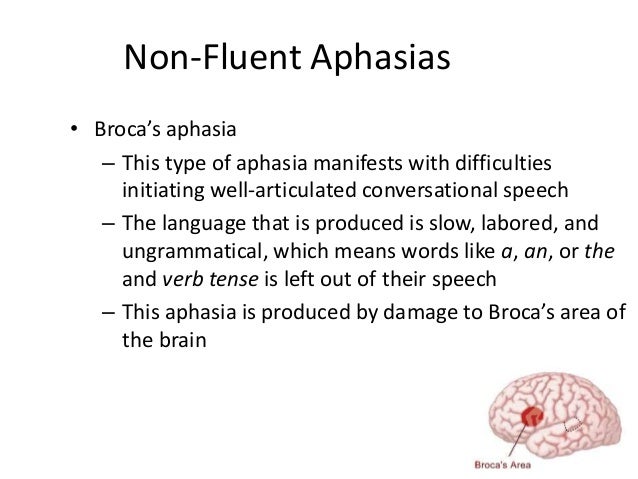
  3. 20. Non-Fluent Aphasias: Broca’s aphasia is a type of aphasia characterized by difficulties initiating well-articulated conversational speech. The language produced is slow, labored,
...
Continue reading "Aphasia: Broca's and Wernicke's Types, Symptoms and Examples" »

Medical Records Management: Hospital Workflow Circuits and KPI Standards

Medicine and health sciencesUpdated on 2.54 KB

Hospital Revenue and Admission Circuits

Outpatient Hospitalization

  • Central file of medical records
  • Resolution of hospitalization
  • Outpatient hospital units
  • Investigations
  • Block surgical hospitalization
  • Discharge (HIGH)

Emergency Department Circuit History

Emergency Admission Process

  • Hospital emergency department admission
  • Central file of medical records
  • Resolution of emergency
  • Outpatient emergency department
  • Inpatient units
  • Block surgical hospitalization
  • Discharge (HIGH)

Medical Record Availability and Performance Metrics

Key Performance Indicators

  • Index of Unrequested Records: (Records not served / Records requested) x 100. Standard: 5% - 10%
  • Index of Records Outside File: Records borrowed in the past 12 months. Standard: 1-3
  • Security Index: (Records served - Records
...
Continue reading "Medical Records Management: Hospital Workflow Circuits and KPI Standards" »

Ophthalmology Medical Technology Specialty: History, Curriculum and Roles

Medicine and health sciencesUpdated on 3.04 KB

Medical Technology Ophthalmology Specialty

About Jessica Castillo Díaz

Jessica Castillo Díaz
Assistant Professor, Valparaiso University and UTA since 2009. 2003–2009 Faculty, Medical Technology School, Universidad Andrés Bello. Medical Technologist in Ophthalmology, University of Chile. Post-degree in visual field. Studying for a Master in Teaching for Higher Education. Treasurer, Chilean Scientific Society of Ophthalmology Technologists; Scientific Director, SCCHTMO.

Research on tear film macromolecules, University of Chile, with two international publications.

Our History

In 1955 the creation of the Ophthalmology specialty at the School of Technical Laboring, National Health Service, was agreed upon, and teaching began in 1956. The main purpose...

Continue reading "Ophthalmology Medical Technology Specialty: History, Curriculum and Roles" »

Effective Hospital Infection Control: Hand Hygiene & Stewardship

Medicine and health sciences4.02 KB

Hospital Infection Control

Hospital Infection Control refers to measures taken to prevent and control infections within a hospital setting. These measures ensure patient safety, protect healthcare workers, and limit the spread of pathogens.

Key Points:

  1. Hand Hygiene:
    Washing hands with soap and water or using alcohol-based hand rubs is the most effective way to prevent infection.
  2. Personal Protective Equipment (PPE):
    Use of gloves, masks, gowns, and eye protection to prevent transmission of microorganisms.
  3. Sterilization and Disinfection:
    Instruments, medical devices, and surfaces are cleaned, disinfected, or sterilized as per protocol.
  4. Isolation of Infected Patients:
    Isolation precautions (standard, contact, droplet, and airborne) are implemented to prevent
...
Continue reading "Effective Hospital Infection Control: Hand Hygiene & Stewardship" »

Essential English Vocabulary and Grammar

Medicine and health sciences5.75 KB

Vocabulary

  • Being admired by the people around you
  • Being part of a loving family
  • Doing really well in your studies or work
  • Having enough money to live well
  • Having friends
  • Having a lot of time to spend on the things I love doing
  • Living in a nice neighborhood

Achieve, Carry Out, and Devote

  • Achieve: *conseguir/lograr* (It helped her to achieve her aim of improving her family's happiness)
  • Carry out: *llevar a cabo* (Susan's concerns prompted her to carry out her own research)
  • Devote: *dedicar* (We know devoting more time...)

Stay, Spend, and Pass

  • Stay: *permanecer, estar tiempo* (I stayed 2 hours listening to the radio)
  • Spend: *pasar/gastar* (I have spent my life studying)
  • Pass: *pasar tiempo*

Make, Cause, and Have

  • Make: *hizo que* (The bad sound made the film difficult
...
Continue reading "Essential English Vocabulary and Grammar" »

Cosmetic Formulation Principles for Personal Care

Medicine and health sciences117.16 KB


Rinse-Off Products

Rinse-off products differ from leave-on products because they are only on the body transiently and are then washed away.

  • Therefore, they are not generally used to deliver functional ingredients for absorption.

  • They must deliver their function(s) rapidly.

  • They might contain some minimal amount of ingredients designed to remain after rinsing.

  • They can better tolerate the presence of ingredients that might cause irritation or allergies than a leave-on product.

  • Mostly, rinse-off products for personal care are used as cleansers, so surfactants and solvents are key ingredients.


Cleaning – A Bit of History

  • Ancient civilizations employed various methods for cleaning skin and hair using natural substances.

  • Egyptian civilization: used soap-

...
Continue reading "Cosmetic Formulation Principles for Personal Care" »

Business English Vocabulary and Meeting Phrases

Medicine and health sciences8.67 KB

Lunes(ON) Mes(IN) Meses+fecha(ON) por tarde/maña(IN)  Estaciones(IN)      2ºCONDIT (If/Unless+ past Simpl, would+infitv)   3ºCOND (If/Unless + Past perfet,would/might/could+ have+past)  

PASSIV(Pres.Simpl: Is/are conducted)-(Past Simpl: Was conducted)-(Futur:Will be conductd)  (Pesen.Cont=Is/are being conductd)-(Past.Cont= was/were being conductd) Present.Perf(have conductd=HAS been conductd)      

REPORTD (Pres Simpl: eat=ATE)-(Past Simpl: ate=HAD EATEN )-(Futur:will eat=Pesen.Cont=are eating=WERE EATING)-(Past.Cont=were eating/= ) Pres.Perf(have eaten= HAD EATEN) Pres.Perf.Cont(have been eating= HAD been eating) Past Perf.Simp(had eaten=HAD EATEN)                                                                                                                                                   

...
Continue reading "Business English Vocabulary and Meeting Phrases" »

Understanding Working Hours in Los Angeles: Regulations and Rights

Medicine and health sciences3.09 KB

Understanding Working Hours in Los Angeles

1. Working Hours

Working hours in Los Angeles (LA) refer to the time an employee spends working, calculated on a daily, weekly, or annual basis. The maximum duration is 40 hours per week, with no more than 9 hours per day, unless there is an agreement for an uneven distribution of hours throughout the year. Rest periods must be respected. Periods devoted to movement, changing clothes, etc., are not considered actual working time. Children under 18 cannot work more than 8 hours a day, including time spent on training.

The Law on the Settlement of Personal, Family, and Labor Life states that work schedules can be adapted, subject to agreement between both parties.

1.1. Extension or Reduction of Working Hours

Working...

Continue reading "Understanding Working Hours in Los Angeles: Regulations and Rights" »

English Grammar Rules and Unit Vocabulary Lists

Medicine and health sciences4.04 KB

Reported Speech Rules

  • Offer, promise, agree: Use verb + to + infinitive.
  • Suggest, admit: Use verb + -ing.
  • Tell, ask, advise, order, warn: Use verb + object + to + infinitive.
  • Apologize: Use apologize for + -ing.
  • Tell, say, announce, recommend: Use verb + that (Note: Tell requires an object, say does not).

Passive Voice Construction

To form the passive voice, the object of the active sentence becomes the subject. Use the verb be (in the correct tense) + past participle. Use by + object to indicate the agent.

  • Present Simple: is/are eaten
  • Present Continuous: is being eaten
  • Present Perfect: has been eaten
  • Past Simple: was/were eaten
  • Future: will be eaten
  • Past Perfect: had been eaten
  • Modals: can/must be eaten / should be eaten
  • Double Objects: "They gave Sophia
...
Continue reading "English Grammar Rules and Unit Vocabulary Lists" »

Surgical Procedures, Wound Care, and Clinical Management

Medicine and health sciences131.21 KB

Surgical Wounds: Types, Healing, and Management

Definition of Surgical Wounds

A surgical wound is an intentional incision or cut made in the skin and underlying tissues by a surgeon during a surgical procedure. These wounds result from the use of sterile instruments and are typically closed with sutures, staples, or adhesives.

Classification of Surgical Wounds

Surgical wounds are classified based on their level of contamination and the risk of infection:

Based on Cleanliness and Contamination

  1. Clean Wound (Class I)
    • Created under sterile conditions without contamination.
    • No involvement of respiratory, gastrointestinal, or genitourinary tracts.
    • Example: Hernia repair, breast surgery.
    • Infection risk: <2%.
  2. Clean-Contaminated Wound (Class II)
    • Involves entry
...
Continue reading "Surgical Procedures, Wound Care, and Clinical Management" »