Notes, summaries, assignments, exams, and exercises for Chemistry for University

Froth Flotation Process for Mineral Separation

Chemistry3.04 KB

Objective of the Flotation Process

The objective of the flotation line is a physicochemical process that allows the separation of sulfide minerals, such as copper sulfide and molybdenum minerals, from other species that share most of the original mineral. Flotation is performed using the pulp from the grinding stage, which has already incorporated the necessary reagents. The pulp is placed in containers called flotation cells, in which air bubbles are introduced while keeping the mixture under constant agitation so that particle contact is intense.

Concentration Cycles and Final Product

To obtain the product of the phase that requires flotation, the pulp passes through several cycles where bubbles generate a concentrate. For example, copper concentrate...

Continue reading "Froth Flotation Process for Mineral Separation" »

Steel Reinforcement, Welding Standards, and Material Quality Control

Chemistry4.49 KB

Reinforcement Bars and Wires

Reinforcement bars and wire sizes (in mm):

  • Bars (Corrugated, Smooth, and 40 Soldiers): 6, 8, 10, 12, 14, 16, 20, 25, 32.
  • Wires (Smooth, used only for joists): 5, 6, 7, 8, 9, 10, and 12.

Material Properties and Identification

Key properties include: B lim elast. (Elastic Limit), Weldability, and Ductility. Features for identification include ovalization, the corrugation material identification, and country of origin.

Electrically Welded Mesh and High-Strength Steels

Electrically Welded Mesh (ME): Used for savings and separation (longitudinal x transverse). Identification includes: dl-disc (discontinuous longitudinal), BNS (bar), T (wire), b (width), xl (length), and electron beam processing (AB haltura c (step)).

The longitudinal...

Continue reading "Steel Reinforcement, Welding Standards, and Material Quality Control" »

Understanding Hydrophobic Effects and Stereoisomerism in Chemistry

Chemistry3.32 KB

Q: Explain in detail the interaction of hydrophobic or hydrophobic effect. Is it a chemical bond? Explain your answer. Discuss the importance of this phenomenon in the formation and stability of biological membranes.
Hydrophobic Effect: The tendency of nonpolar molecules to cluster in polar solvents like H2O for energetic reasons. Nonpolar substances tend to associate with one another in aqueous solutions because this results in fewer water molecules being involved in the cage that surrounds them. This situation is thermodynamically favored as it leads to lower order due to fewer water molecules (i.e., the entropy is higher) compared to when each polar molecule is surrounded by individual water molecules.
It is a chemical bond since it is...

Continue reading "Understanding Hydrophobic Effects and Stereoisomerism in Chemistry" »

Essential Pharmaceutical Calculations and Clinical Formulas

Chemistry638.05 KB

Weighing and Measuring Fundamentals

  • Percentage Error in Weighing: % error = (sensitivity / amount weighed) × 100

Buffer Solutions and pH Calculations

Calculating pH for Weak Acid Buffers

  • Henderson-Hasselbalch Equation: pH = pKa + log10([salt] / [acid])
  • [salt] = concentration of the salt (mol/L)
  • [acid] = concentration of the acid (mol/L)
  • Antilog of x: 10x (log transferred to the right-hand side becomes antilog)

Calculating Buffer Capacity

HtHnXYmWQAAAAASUVORK5CYII=

  • Ka: Dissociation constant
  • [H+]: Hydrogen ion concentration
  • C: Total buffer concentration in mol/L

ShhCwNQJEGLYeHlKOELAXAn8DAmjphiKOHzsAAAAASUVORK5CYII=

Clinical Calculations and Body Metrics

Ab5SWyBZVHQUAAAAAElFTkSuQmCC

Ideal Body Weight (IBW) Formulas

  • Male: 50 kg + 0.9 kg for each cm above 152 cm
  • Female: 45.5 kg + 0.9 kg for each cm above 152 cm
  • Flow Rate Conversion: To convert mL/min to mL/sec, divide
...
Continue reading "Essential Pharmaceutical Calculations and Clinical Formulas" »

Essential Petroleum Refining Processes and Origin Theories

Chemistry3.35 KB

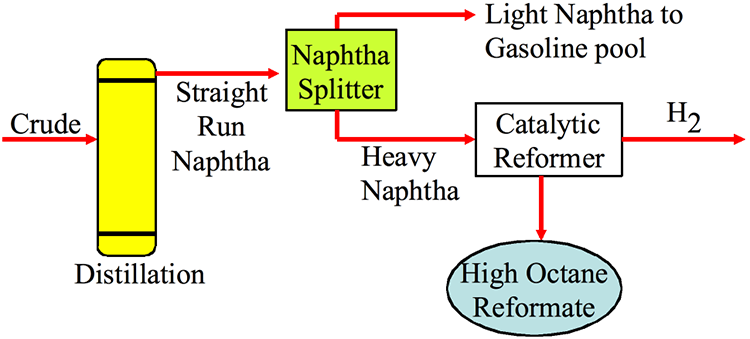
Catalytic Reforming Process Fundamentals

Catalytic Reforming | FSC 432: Petroleum Refining

  • Converts low-octane naphtha into high-octane reformate, which is used for gasoline blending and aromatics production.
  • Feed is mixed with hydrogen, heated, and passed over a catalyst in fixed-bed reactors.
  • Major reactions include dehydrogenation to aromatics, isomerization to branched paraffins, and mild hydrocracking.
  • Operating conditions are typically 450–520 °C temperature and 10–45 atm pressure.
  • The catalyst used is platinum on alumina or bimetallic Pt–Re on alumina.
  • Main products are reformate, hydrogen, LPG, and light hydrocarbons.

Fluid Catalytic Cracking (FCC) Technology

  1. FCC converts heavy gas oils into valuable products like high-octane gasoline, LPG, and olefins.
  2. Preheated feed contacts hot,
...
Continue reading "Essential Petroleum Refining Processes and Origin Theories" »

Essential Chemistry Formulas and Molecular Geometry Reference

Chemistry3.84 KB

Essential Chemistry Formulas and Reference

Miscellaneous Formulas

  • Area of a Circle: 3.14r²
  • Volume: Area × Height
  • Density: Mass / Volume
  • % Composition of Element: [(# of atoms of element) × (atomic weight of element)] / formula weight of substance × 100
  • Molarity: (moles of solute) / (volume of solution in Liters)
  • Bond Order: (# shared electrons) - (# nonbonding electrons) / 2
  • Pressure: Force / Area
  • Pressure × Volume: nRT
  • Density of Gas: (Pressure × Molar Mass) / (R × Temperature)
  • Molarity of Gas: (Density × R × Temperature) / Pressure

Temperature and Chemical Conversions

  • Celsius to Kelvin: K = C + 273.15
  • Kelvin to Celsius: C = K - 273.15
  • Celsius to Fahrenheit: F = 9/5(C) + 32
  • Fahrenheit to Celsius: C = 5/9(F - 32)
  • 1 amu: 1.66054 × 10⁻²⁴ g
  • Grams
...
Continue reading "Essential Chemistry Formulas and Molecular Geometry Reference" »

Fundamental Principles of Matter and Energy in Chemistry

Chemistry2.9 KB

Properties of Matter

  • Matter: Anything that has mass and volume.
  • Physical Properties: Changes that occur when a substance alters its physical state, not its composition. Examples include melting, freezing, evaporation, boiling, vaporization, condensation, sublimation, and deposition.
  • Chemical Properties: Changes that occur when a substance is converted into a different substance. Examples include rusting, corroding, tarnishing, combusting, and exploding.
  • Pure Substance: A sample of matter with a definite, constant composition and distinct chemical properties.
  • Mixture: Two or more substances combined such that each retains its own chemical identity.
  • Elements: Substances consisting of one type of atom, distinguished by their atomic number (the number
...
Continue reading "Fundamental Principles of Matter and Energy in Chemistry" »

Atomic Models Explained: From Dalton to Bohr-Sommerfeld

Chemistry2.59 KB

Understanding Atomic Structure and Models

What is a Subatomic Particle?

A subatomic particle is a particle smaller than an atom. It can be an elementary particle or a composite particle, in turn, composed of other subatomic particles such as quarks, which make up protons and neutrons.

Dalton's Atomic Theory: Foundations of Chemistry

Key Postulates of Dalton's Theory

  1. Elements are composed of tiny particles called atoms.
  2. All atoms of a given element are identical in mass and properties.
  3. Atoms of one element differ from those of any other element; atoms of different elements can be distinguished by their relative atomic weights.
  4. Atoms of one element combine with atoms of other elements to form chemical compounds. A given compound always has the same relative
...
Continue reading "Atomic Models Explained: From Dalton to Bohr-Sommerfeld" »

Mineral Properties: Identification and Classification

Chemistry2.98 KB

Defining Raya

Raya refers to the color of a mineral when it is pulverized into a fine powder.

Defining Brightness and Its Significance

Brightness

Brightness describes the general appearance of a mineral's cool surface when observed under reflected light. It is influenced by factors such as the refractive index, degree of transparency, and surface polish.

Types of Brightness

Metallic

Minerals with a metallic brightness exhibit a glow similar to polished metals and have a high refractive index.

Non-Metallic

Non-metallic minerals are typically light in color and have a low refractive index. They can be further classified as:

  • Silky (resembling silk)
  • Pearly (exhibiting a peel-like appearance)
  • Earthy (scattering light completely)
  • Greasy (having an oily appearance)
...
Continue reading "Mineral Properties: Identification and Classification" »

Water's Vital Role in Life and Biological Processes

Chemistry3.17 KB

Water: The Foundation of Life

Life on Earth began in water, evolving over 3 billion years before conquering land. Water continues to be essential for all living beings.

Water's Essential Role in Biological Systems

The unique properties of cell membranes are due to their particular structure, which in turn is due to the tendency of the phospholipids that compose them to form bilayers in aqueous media.

  • Water is Essential for Life: It is a constituent of cells (its percentage depends on cell type and physiological state), provides a means of transport for solutes over short and long distances, and is involved in cell metabolism as a substrate, product, or reagent.
  • Turgor: A feature of plant cells where water exerts pressure on the cell wall. It is
...
Continue reading "Water's Vital Role in Life and Biological Processes" »