
Notes, summaries, assignments, exams, and exercises for Chemistry for Baccalaureate

Chemical Reaction Kinetics and Theories Explained

Chemistry3.76 KB

Collision Theory

For a reaction to occur, the molecules of the reacting substances must collide. Any factor that increases the collision frequency of such collisions, or increases the probability that these collisions occur with appropriate orientation and possess sufficient energy, will increase the reaction speed.

Reaction Rate ($ ext{V}_{ ext{reaccion}}$): Number of collisions $\times$ time / Molecules of reagents.

Effective Collision

An effective collision requires:

  • Appropriate orientation.
  • Sufficient energy.

Activation Energy

The Activation Energy ($ ext{E}_{ ext{A}}$) corresponds to the maximum energy reached in the intermediate state of the system, known as the activated complex state. It is the energy needed to move from the reactant state...
Continue reading "Chemical Reaction Kinetics and Theories Explained" »

Crude Oil Refining: Process Steps, Products, and Viscosity

Chemistry2.89 KB

Petroleum Characteristics and Reservoir Viscosity

The viscosity of the crude oil in the reservoir can range from 0.2 to more than 1,000 centipoise.

Technological Importance of Petroleum Products

Oil's technological importance lies in the vast number of products created from crude manipulation. These materials are essential and common in everyday life, such as:

  • Asphalt
  • Synthetic fabrics
  • Plastics
  • Lubricants
  • Waxes

Petroleum Derivatives Used for Energy

Petroleum derivatives serve as crucial energy sources, including:

  • Gasoline: Engine oil and extra power fuel.
  • Turbo-fuel or Jet Fuel: Used for aviation.
  • Aviation Gasoline
  • Diesel
  • Kerosene

The Importance and Uses of Natural Gas

Natural gas is used as fuel for domestic and industrial purposes. In addition to its high...

Continue reading "Crude Oil Refining: Process Steps, Products, and Viscosity" »

Chemical Bonding: Principles, Structures, and Forces

Chemistry2.06 KB

Chemical Bonding

Chemical bonding occurs when two or more atoms are close enough to produce an attractive force between the electrons of individual atoms and the nuclei of other atoms. If this force is strong enough to hold the atoms together, a chemical bond is formed.

Electronegativity and Bond Polarity

Electronegativity is the ability of an atom to attract shared electrons within a covalent bond with another element. The greater the difference in electronegativity between atoms, the more polar the bond will be.

The Octet Rule

Proposed in 1916 by Gilbert Newton Lewis, the octet rule states that atoms tend to gain, lose, or share electrons to achieve a stable electron configuration similar to that of a noble gas. These elements, located on the...

Continue reading "Chemical Bonding: Principles, Structures, and Forces" »

Chemical Elements and Atomic Weights List

Chemistry4.98 KB

Chemical Elements and Atomic Weights

  • Hydrogen (H): 1.0079
  • Helium (He): 4.0026
  • Lithium (Li): 6.941
  • Beryllium (Be): 9.0122
  • Boron (B): 10.811
  • Carbon (C): 12.0107
  • Nitrogen (N): 14.0067
  • Oxygen (O): 15.9994
  • Fluorine (F): 18.9984
  • Neon (Ne): 20.1797
  • Sodium (Na): 22.9897
  • Magnesium (Mg): 24.305
  • Aluminum (Al): 26.9815
  • Silicon (Si): 28.0855
  • Phosphorus (P): 30.9738
  • Sulfur (S): 32.065
  • Chlorine (Cl): 35.453
  • Potassium (K): 39.0983
  • Argon (Ar): 39.948
  • Calcium (Ca): 40.078
  • Scandium (Sc): 44.9559
  • Titanium (Ti): 47.867
  • Vanadium (V): 50.9415
  • Chromium (Cr): 51.9961
  • Manganese (Mn): 54.938
  • Iron (Fe): 55.845
  • Nickel (Ni): 58.6934
  • Cobalt (Co): 58.9332
  • Copper (Cu): 63.546
  • Zinc (Zn): 65.39
  • Gallium (Ga): 69.723
  • Germanium (Ge): 72.64
  • Arsenic (As): 74.9216
  • Selenium (Se): 78.96
  • Bromine (Br): 79.904
  • Krypton (Kr)
...
Continue reading "Chemical Elements and Atomic Weights List" »

Properties and Separation Methods of Chemical Substances

Chemistry4.44 KB

Chemical Substances and Mixtures

Chemical substances: N-type material: characteristic properties defined by Cunhas.

Mixtures (Mestura Kimicar)

Mixture: Contains two or more components; often called a chemical mixture (mestura kimicar).

  • Heterogeneous (straight): Two or more phases present.
  • Homogeneous (homo): One phase present (solution).

Colloidal Dispersions

Colloidal dispersion: A type of heterogeneous mixture in which the phases are not easily distinguished by the microscope. It has two main parts:

  • Dispersed phase: The component present in lesser proportion; it is discontinuous and appears as separate particles.
  • Dispersing (continuous) phase: The component present in greater proportion; it constitutes the continuous medium.

Solubility

Solubility: The...

Continue reading "Properties and Separation Methods of Chemical Substances" »

Ferrous Metals: Production, Treatments, and Material Properties

Chemistry3.34 KB

Ferrous Metals: Production, Treatments, and Properties

Mechanical Treatments for Metals

Mechanical treatments improve the characteristics of metals through controlled mechanical deformation.

Types of Mechanical Treatments:

  • Hot Mechanical Treatment: Involves heating the metal followed by stretching or deformation.
  • Cold Mechanical Treatments: Deformation performed at room temperature.

Related Surface Treatments:

Examples include metallization and chrome plating.

Ferrous Metals: Definition and Classification

Ferrous metals are those containing technically pure Iron (Fe) as their basis. Fe is a magnetic, blue-white metal material, known for being ductile and malleable. Its melting point is 1535 °C.

Classification of Ferrous Metals by Carbon Content

  • Industrial
...
Continue reading "Ferrous Metals: Production, Treatments, and Material Properties" »

Bioelements and their importance

Chemistry9.66 KB

## Amino Acids and Peptides
### 1. \alpha-Amino Acids: Structure and Classification
Amino acids are the fundamental building blocks of proteins. An **\alpha-amino acid** consists of a central \alpha-carbon atom bonded to four distinct groups: an amino group (-\text{NH}_2), a carboxylic acid group (-\text{COOH}), a hydrogen atom (-\text{H}), and a variable side chain (-\text{R}).
#### Classification based on R-group polarity:
 * **Non-polar / Hydrophobic:** Side chains are aliphatic hydrocarbons or aromatic rings (e.G., Alanine, Valine, Phenylalanine).
 * **Polar / Uncharged:** Side chains contain hydrophilic groups like hydroxyls or amides (e.G., Serine, Glutamine).
 * **Acidic / Negatively Charged:** Side chains contain an extra carboxyl group...

Continue reading "Bioelements and their importance" »

Closure Properties of Regular Languages Explained

Chemistry2.89 KB

Closure Properties of Regular Languages

A class of languages is said to be closed under an operation if applying that operation on languages of the class results in a language that also belongs to the same class.

👉 Regular languages are closed under several operations.


1. Closure Under Union (∪)

Statement

If L₁ and L₂ are regular languages, then L₁ ∪ L₂ is also regular.

Explanation

  • Since L₁ and L₂ are regular, there exist DFAs M₁ and M₂.
  • Using product construction, a DFA can be built that accepts strings accepted by either M₁ or M₂.

✅ Hence, regular languages are closed under union.


2. Closure Under Intersection (∩)

Statement

If L₁ and L₂ are regular, then L₁ ∩ L₂ is regular.

Explanation

  • Construct a product DFA.
  • A
...
Continue reading "Closure Properties of Regular Languages Explained" »

Vernier Caliper Measurements, Significant Figures & Capacitors

Chemistry4.4 KB

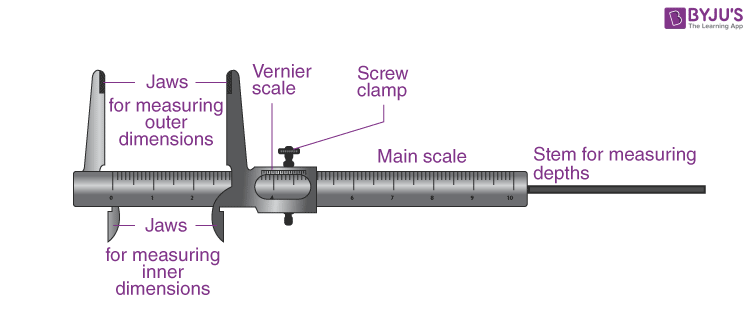
Vernier Caliper

A Vernier caliper is an instrument for making very accurate linear measurements introduced in 1631 by Pierre Vernier of France. It uses two graduated scales: a main scale similar to that on a ruler and an auxiliary scale, the vernier, which slides parallel to the main scale and enables readings to be made to a fraction of a division on the main scale. Vernier calipers are widely used in scientific laboratories and in manufacturing for quality-control measurements.

Vernier Calliper: Definition, Diagram, Least Count, Parts & Applications

Five Rules for Determining Significant Figures

  1. Non-zero digits are significant. For example, in 6575 cm there are four significant figures; in 0.543 there are three significant figures.
  2. Leading zeros are not significant. Zeros that precede the first non-zero digit indicate
...
Continue reading "Vernier Caliper Measurements, Significant Figures & Capacitors" »

Key Chemical Thermodynamics Principles Explained

Chemistry2.45 KB

Key Chemical Thermodynamics Principles

First Law of Thermodynamics

Internal energy is equal to the heat released or absorbed by the system plus the work done by or on the system.

Standard Enthalpy of Formation

The heat change resulting from the formation of one mole of a compound from its elements in their most stable states of aggregation.

Enthalpy of a Chemical Reaction

The heat absorbed or released from the system when the reaction occurs at constant pressure.

Hess's Law

A chemical reaction can be expressed as an algebraic sum of others; its heat of reaction is equal to the algebraic sum of the heats of the partial reactions.

Bond Enthalpy (Bond Energy)

The heat flow, absolute, for the formation or rupture of a mole of bonds from the isolated atoms...

Continue reading "Key Chemical Thermodynamics Principles Explained" »