Notes, summaries, assignments, exams, and exercises for Visual arts and art education for Primary education

Technical Drawing Lettering and Dimensioning Standards

Visual arts and art education3.69 KB

Standards for Technical Drawing Lettering

Lettering involves the use of letters, numbers, and symbols. Since a clear picture alone cannot express everything (such as dimensions and specific details), characters are used in technical drawings. These are standardized according to UNE 1 034-75 and must meet requirements for readability, consistency, and suitability for photographic reproduction.

Types of Lettering Styles

  • Italics: The characters in this lettering style are inclined at 75 degrees toward the right relative to the horizontal. This may be Type B, which is commonly used in the metallurgical industry.
  • Vertical: This lettering style is used in plans for the construction industry as well as in electrical and electronic schemes. It can also
...
Continue reading "Technical Drawing Lettering and Dimensioning Standards" »

Map Projections: Dimensions, Geometry, and Classifications

Visual arts and art education3.6 KB

Types of Map Projections by Preserved Dimension

1. Equidistant Projections
These projections preserve distances along specific directions, typically along straight lines known as automecoic lines. Linear deformation occurs in other directions. The linear anamorphosis, calculated as the ratio of the projected distance to the true distance, equals 1 along automecoic lines. Equidistant projections are useful for measuring distances from a central point.
2. Conformal Projections
These projections preserve angles between intersecting curves and lines. The angular anamorphosis represents the difference between the angle on the sphere and the corresponding angle on the map. Conformal projections are commonly used for nautical charts, often employing parallel...

Continue reading "Map Projections: Dimensions, Geometry, and Classifications" »

Gothic Art and Architecture: Medieval Style Innovations

Visual arts and art education3.19 KB

Gothic Art: Origins and Characteristics

Gothic Art flourished from the middle of the 12th century until the 15th century, and in some places, the 16th century. This style of Medieval art originated in France, evolving out of the Romanesque style.

Gothic art was strongly criticized in the 15th century. It was initially criticized by French authors before becoming a recognized form of art, and the terminology became fixed. The word “Gothic” for art is synonymous with “barbaric” and was used pejoratively. Art critics then taught it was undefined and too remote. Gothic was also known as “Opus Modernum.” The term “Gothic” was first coined for architecture.

Gothic Architecture: Lightness and Structural Grace

Gothic architecture moved...

Continue reading "Gothic Art and Architecture: Medieval Style Innovations" »

Yehoshua's Miracles: Sun, Stones, and Conquests

Visual arts and art education3.56 KB

Hashem Causes Chaos Among the Kings

Hashem caused chaos and stress for the kings. Hashem brought a huge מכה in Givon.

Rocks and Hail from the Sky

As they were trying to run away through a very narrow path, large rocks came from the sky.

  1. Rocks were from space.
  2. Hail with rocks.

Many people were killed first by stones and then by swords.

Yehoshua Prays; Sun and Moon Stop

אז — something positive: Yehoshua began speaking to Hashem. The sun stopped in Givon and the ירח stopped in עמקאילהאן.

Hashem stopped the sun twice.

  1. At noon for 24 hours.
  2. When the sun was setting, He stopped it for 24 hours.

(The moon was also shining at the same time.) A total of 48 hours of daylight.

There was never a day like this before, and never will be, because Hashem...

Continue reading "Yehoshua's Miracles: Sun, Stones, and Conquests" »

Fundamental Principles and Elements of Visual Art

Visual arts and art education2.79 KB

Principles of Art

The principles of art are the means an artist uses to organize elements within a work. These include: balance, emphasis, movement, proportion, rhythm, unity, and variety.

Rhythm

A principle of design that indicates movement, created by the careful placement of repeated elements in a work of art to cause a visual tempo or beat.

Balance

A way of combining elements to add a feeling of equilibrium or stability to a work of art. Major types are symmetrical and asymmetrical.

Emphasis (Contrast)

A way of combining elements to stress the differences between those elements.

Proportion

A principle of design that refers to the relationship of certain elements to the whole and to each other.

Gradation

A way of combining elements by using a series...

Continue reading "Fundamental Principles and Elements of Visual Art" »

Answer Keys for Yearly Exam Papers (2000-2008): Colors and Questions

Visual arts and art education5.76 KB

Answer Keys for Yearly Exam Papers (2000-2008)

The following answer keys list the responses for each yearly exam paper, organized by paper color: White, Pink, Yellow, Green, Blue, and Rose.

2000 - White, Pink, Yellow, Green

Q1 ADDA, Q2 BBDC, Q3 CEDE, Q4 eAAC, Q5 BEDB, Q6 DBAE, Q7 eadc, Q8 BBæ, Q9 BCCB, Q10 AECA, Q11 DBAD, Q12 DDAC, Q13 DEBA, Q14 ABCB, Q15 DBEC, Q16 DABE, Q17 BDDB, Q18 eded, Q19 ADBA, Q20 EABE, Q21 BDAD, Q22 AADD, Q23 DDBE, Q24 AAEB, Q25 CCAD, Q26 CCEC, Q27 Aabd, Q28 AAAD, Q29 DDDD, Q30 DDDD, Q31 ddde, Q32 CCCB, Q33 BBBB, Q34 AAAA, Q35 CCCD, Q36 EEEDEA, Q37 CCCD, Q38 BBBAA, Q39 EEEDEA, Q40 CCCD, Q41 EEEB, Q42 BBBEE, Q43 AAAA, Q44 ddde, Q45 CCCB, Q46 BBBAA, Q47 BBBD, Q48 DDDA, Q49 CEES, Q50 AAAC, Q51 eeea, Q52 DDDA, Q53 ACAD, Q54...

Continue reading "Answer Keys for Yearly Exam Papers (2000-2008): Colors and Questions" »

Essential English-Spanish Vocabulary: Food and Emotions

Visual arts and art education22.37 KB

Elementos y Partes de la Elipse con Diagramas - Neurochispas

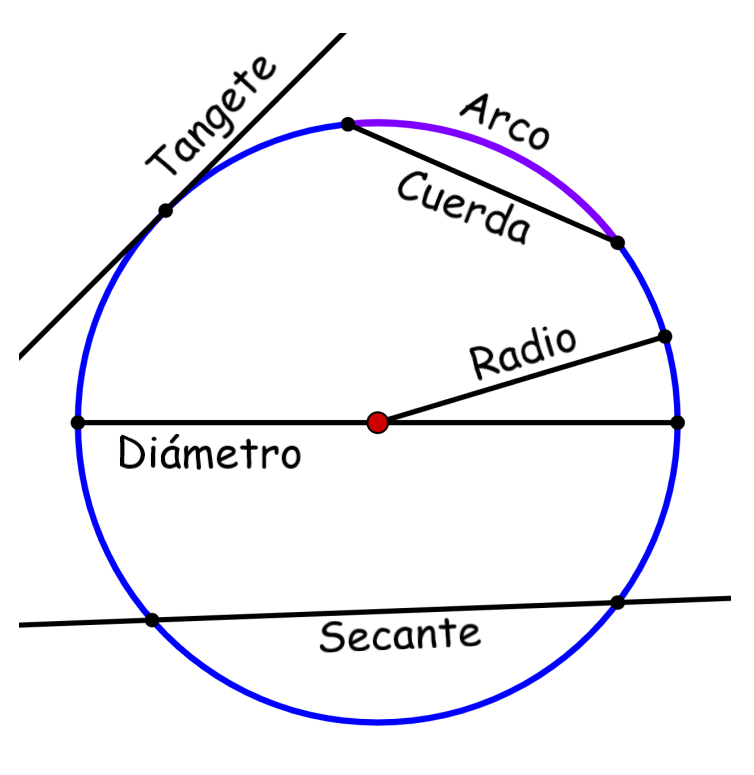
Partes de una Circunferencia con Diagramas - Neurochispas

Fruits and Nuts (Frutas y Frutos Secos)

  • Almond: almendra
  • Apple: manzana
  • Apricot: damasco, albaricoque
  • Avocado: aguacate
  • Banana: banana, plátano
  • Blackberry: mora, zarzamora
  • Blueberry: arándano
  • Cherry: cereza
  • Chestnut: castaña
  • Coconut: coco
  • Date: dátil
  • Fig: higo
  • Grape: uva
  • Grapefruit: pomelo, toronja
  • Hazelnut: avellana
  • Lemon: limón
  • Lime: lima
  • Mango: mango
  • Melon: melón
  • Morello cherry: guinda
  • Nectarine: nectarina
  • Orange: naranja
  • Papaya: papaya
  • Peach: durazno, melocotón
  • Peanut: cacahuete, maní
  • Pear: pera
  • Pineapple: piña, ananá
  • Plum: ciruela
  • Raspberry: frambuesa
  • Strawberry: fresa, frutilla
  • Tangerine: mandarina
  • Watermelon: sandía

Fish and Seafood (Pescados y Mariscos)

  • Clam: almeja
  • Cockles: berberechos
  • Cod: bacalao
  • Crab: cangrejo de mar
  • Eel: anguila
  • Fried shrimps: gambas fritas
  • Hake:
...
Continue reading "Essential English-Spanish Vocabulary: Food and Emotions" »